Altitude, Guides and the Cable Car
Free hiking stops at 2,500 m. Above that an authorised guide is mandatory by mayoral ordinance — and the rule changed three times in three days last August.
You can walk on Etna without a guide up to 2,500 metres. Above that an authorised guide is compulsory, and the exact ceiling moves with the volcano.
That first number is the one to remember, and it is not the number most pages give you.
Where the 2,900 metres you have read comes from
Search this and you will be told the guide requirement starts at 2,900 m, or sometimes 3,000 m. Those figures are real — they are Prefecture of Catania ordinances from August 2010.
The framework has been rebuilt twice since, most recently in August 2025. The current rule keys on 2,500 m. You can watch the old number decaying inside the guide associations’ own copy: one of them states in a single answer that a guide is required above 2,900 m and that you may climb unaccompanied to about 2,750 m. Both cannot be true.
The rule as it actually stands
Three bands, from the mayoral ordinance text:
Below 2,500 m — free. No guide, no permit, no ticket. Escursione libera fino a quota 2500 mt. This band contains the Rifugio Sapienza area, the cable-car base station, and the Silvestri craters at 1,886 and 1,986 metres — which is why they are free to anyone who drives up.
2,500 m to 2,750 m — authorised guide mandatory. An enrolled Guida Alpina o Vulcanologica, with suitable clothing for the terrain.
Above 2,750 m — prohibited. È assolutamente vietato superare la quota di 2750 m s.l.m.
One honest caveat on that last line: 2,750 m sits awkwardly against products still sold from the south side, including a cable-car package advertised to 3,000 m and guided summit treks to 3,300–3,400 m. The likeliest reading is that 2,750 m is a heightened-alert ceiling rather than the year-round baseline — the guide associations’ own March 2026 price list caps their 4x4 and snowcat trips at exactly 2,750 m, and a heightened phase has been in force since August. We could not confirm it either way, so we are telling you both.
Treat 2,500 m as solid. Treat 2,750 m as probably current and worth checking.
Who actually decides, and why it changes so often
Not the national park. Parco dell’Etna publishes the ordinances; it does not write them.
The chain runs: INGV states the technical phase from its monitoring, national civil protection sets the alert colour, the regional civil protection converts that into an operational phase — attenzione, preallarme, allarme — and then the mayors of the thirteen Etna comuni issue the ordinances that are actually enforceable. Breaching one is a criminal-code offence, and in the highest phase the forestry corps and the finance police put control points on both the south and north approach roads.
Modern ordinances no longer draw one altitude line. They reference INGV polygons — a summit zone and an inner permanently-hazardous zone — and what closes depends on the phase:
- Attenzione — the inner zone is open only with an authorised guide, with safety equipment including a protective helmet, capped at 300 hikers a day, crossing limited to the time strictly necessary.
- Preallarme — the inner zone is closed to excursions.
- Allarme — the whole summit zone closes, with immediate cessation of anything in progress.
How fast this moves
Here is the fact that should shape your planning more than any number on this page.
One comune reissued its ordinance three times in three days last August — the 18th, the 19th and the 20th — each superseding the one before, each valid immediately and until another is issued.
So when we say check on the day, that is not a disclaimer. It is the accurate description of a rule that is genuinely reissued at that tempo. We are not going to print today’s status on this page, because it would be wrong within the week and you would have no way of knowing.
Check these three, which are the primary sources rather than anybody’s summary:
- INGV Osservatorio Etneo publishes a weekly bulletin on the volcano’s state.
- National civil protection publishes the current alert colour.
- Parco dell’Etna maintains the index of current mayoral ordinances.
The cable car, and what €82 actually buys
There is one cable car on Etna, on the south side from the base station above Rifugio Sapienza. There is none on the north — the north has ski lifts and a chairlift, and they are winter-only.
Published for 2026:
| Ticket | Adult | Child | Reaches |
|---|---|---|---|
| Cable car return | €54 (from 11) | €31 (to 10; under 5 free) | 2,500 m |
| Tour 3000 — cable car + 4x4 bus + guide | €82 | not published | advertised to 3,000 m |
| Sicily residents, cable car return | €15 | — | 2,500 m |
The €82 ticket is the one that matters, because it is the only single published price that bundles the transport and an authorised guide — which is precisely what the 2,500 m rule requires you to have. No tour on our own shelf includes it.
Cable car hours are 08:30 to 16:45 with the last descent at 17:15, weather permitting. As we write, the operator is selling Tour 3000 at the ticket office only, not online, because of changeable weather — which tells you how day-by-day the upper mountain is.
The wind clause almost every page gets wrong
You will read that high wind means losing your booking. Usually it does not.
The operator’s own terms of sale say the altitude printed on your ticket is guaranteed, that the type of transport may vary — cable car, 4x4 vehicles, others — and that such a variation does not entitle you to a refund. In practice that means a windy day often converts your cable-car ride into a 4x4 bus at the same price, rather than cancelling it.
What is genuinely not refundable is a weather or volcanic suspension. The terms say so twice, plainly: no refunds. A full-day technical stoppage is treated differently and is refundable.
Worth knowing that the three ways of buying differ sharply here:
Direct from the cable-car operator — no refund, no withdrawal right. Through a booking platform — free cancellation 24–48 hours ahead, which is the platform’s policy and does not cover a same-day closure. Through a guide association — several take payment on the day, in person, no deposit, so a weather cancellation costs you nothing. That is the best terms on the mountain and almost nobody mentions it.
What to bring, and the rule people do not expect
The guide associations list as mandatory: a packed lunch, at least 1.5 litres of water per person, layered clothing, long trousers, proper walking boots, a windproof or down jacket, gloves and a hat. In summer as well — temperatures at altitude are low regardless of the coast.
On the temperature, the guides work to a lapse rate of about 0.6–0.7°C per 100 metres. From Catania that is roughly 12–13°C colder at the Rifugio Sapienza and 19–20°C colder at 3,000 m. Both of the figures you see quoted online — “10–15 degrees” and “15–20 degrees” — are right, for different altitudes.
And the one nobody expects: a protective helmet is mandatory by ordinance in the inner zone, along with a maximum of ten people per guide, a briefing in English, and a signed declaration of fitness. Hiking is dawn to dusk only, with no bivouac. Two operators also advise against wearing contact lenses, because of ash and gas.
Who should not go high
The cable-car operator does not recommend the upper tour for people with cardiac or respiratory conditions, hypertension, or in pregnancy.
The guide associations are stricter than the operator, and this is worth knowing: one states plainly that the summit excursion is not permitted past the third month of pregnancy, and advises against it for anyone who does little physical activity. Minimum ages are 10 for the mid-altitude walk and 12 for the true summit craters.
The real summit hike is about six hours, eight kilometres and 600 metres of ascent, from 2,800 m to 3,400 m, and the associations grade it difficult. It is not a stroll from a cable car.
For families, the guides themselves recommend the Sartorius craters walk instead — a genuinely easy option in the free band.
The short version
Free to 2,500 m. Guide required above it. Everything above 2,750 m is closed, probably. The summit is decided on the day, by a mayor, on INGV’s advice — and it changed three times in three days last August.
Which is also why what a private tour buys you is not altitude.
All of these operate in the free band
Tours on the Mountain
Useful to know which side each one uses, and that none of them includes the cable car.
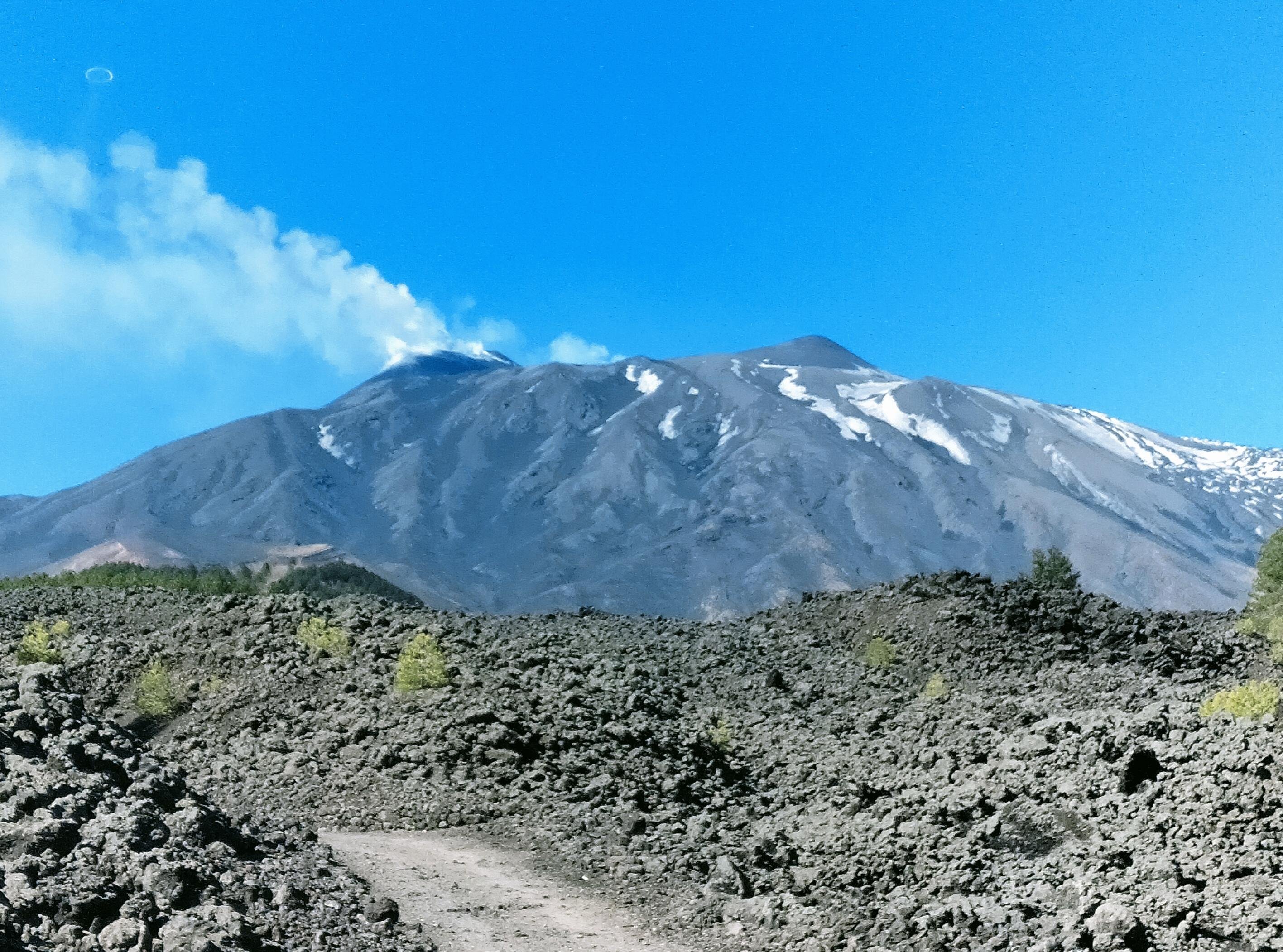
Book the Private 4x4, Decide About the Cable Car Later
The most-reviewed private Etna day collects you in Taormina or Giardini Naxos, drives you up in a private 4x4 with a driver-guide, and takes you into a lava cave with a helmet and lamp — 4.9/5 from 131 verified guests, from about $463. The cable car to go higher is paid on the spot. Free cancellation.
Check Availability & Book